Fragment Combination Graph
The classification of fragment combination was performed on each fragment pair individually. To represent the whole fragment connectivity of a molecule, all corresponding fragment combinations are assembled into a fragment combination graph, where the nodes are the fragments and the edges the combinations:

Alternative Fragment Combinations
Sometimes, it is possible for a given molecule to be represented by different fragment combination graphs. In this case, a new row is created for each alternative graph. A Fragment Graph ID is used for sequentially labeling Fragment Graphs belonging to a same molecule.
Independent FCGs
In this case, two of more combination sets are actually independent, i.e. they do not have any fragment combination in common, resulting in individual fragment subgraphs. This can happen when fragments are too far apart from each other (by default, > 3 intermediary atoms).
We considered these to be alternative graphs (but they can be considered as one single graph as well using an option).
An example of twp independant subgraphs is illustred below:
FCG A:
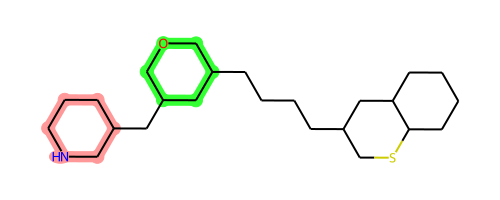
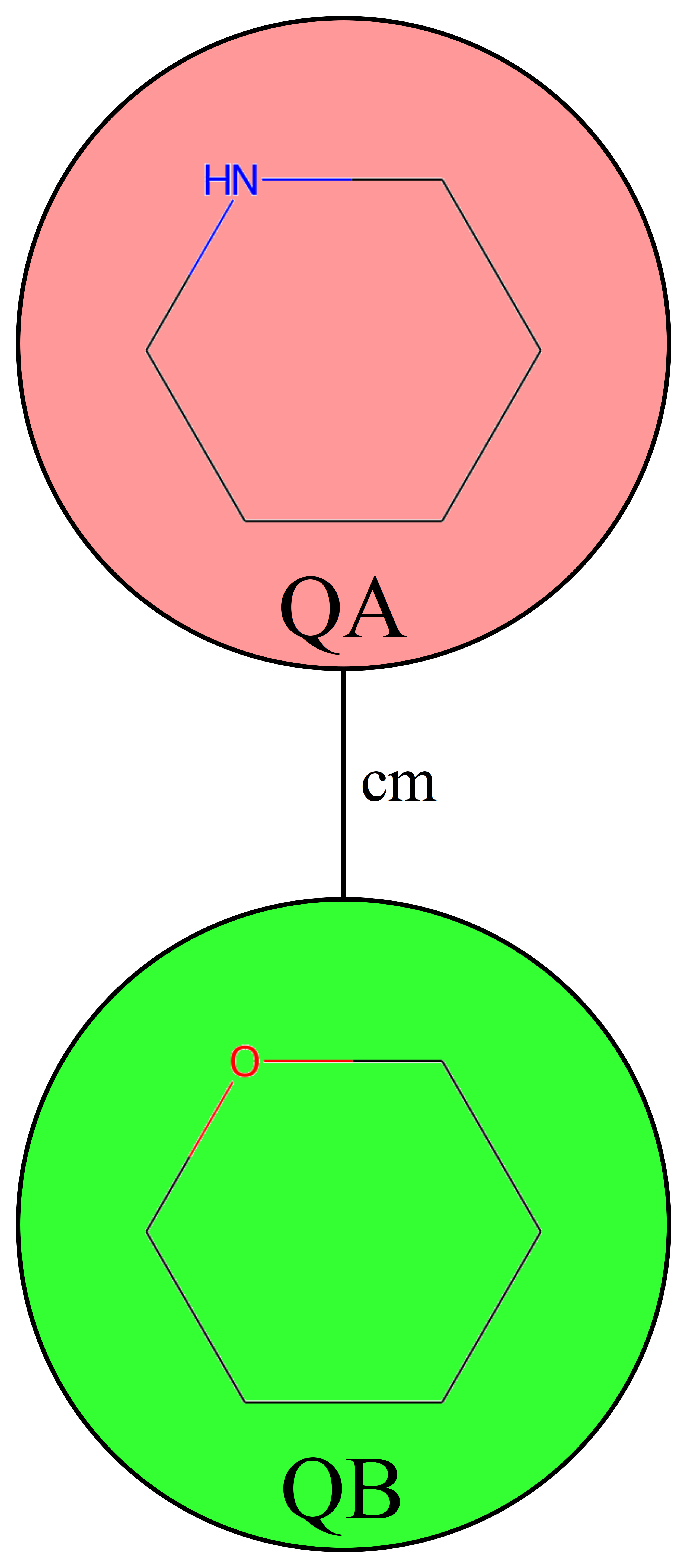
FCG B:
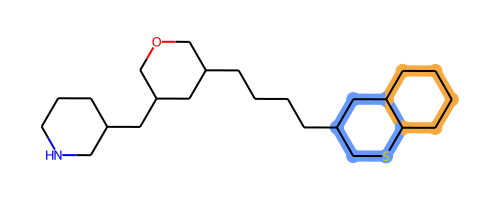

Overlapping FCGs
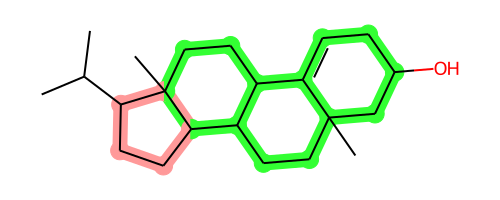
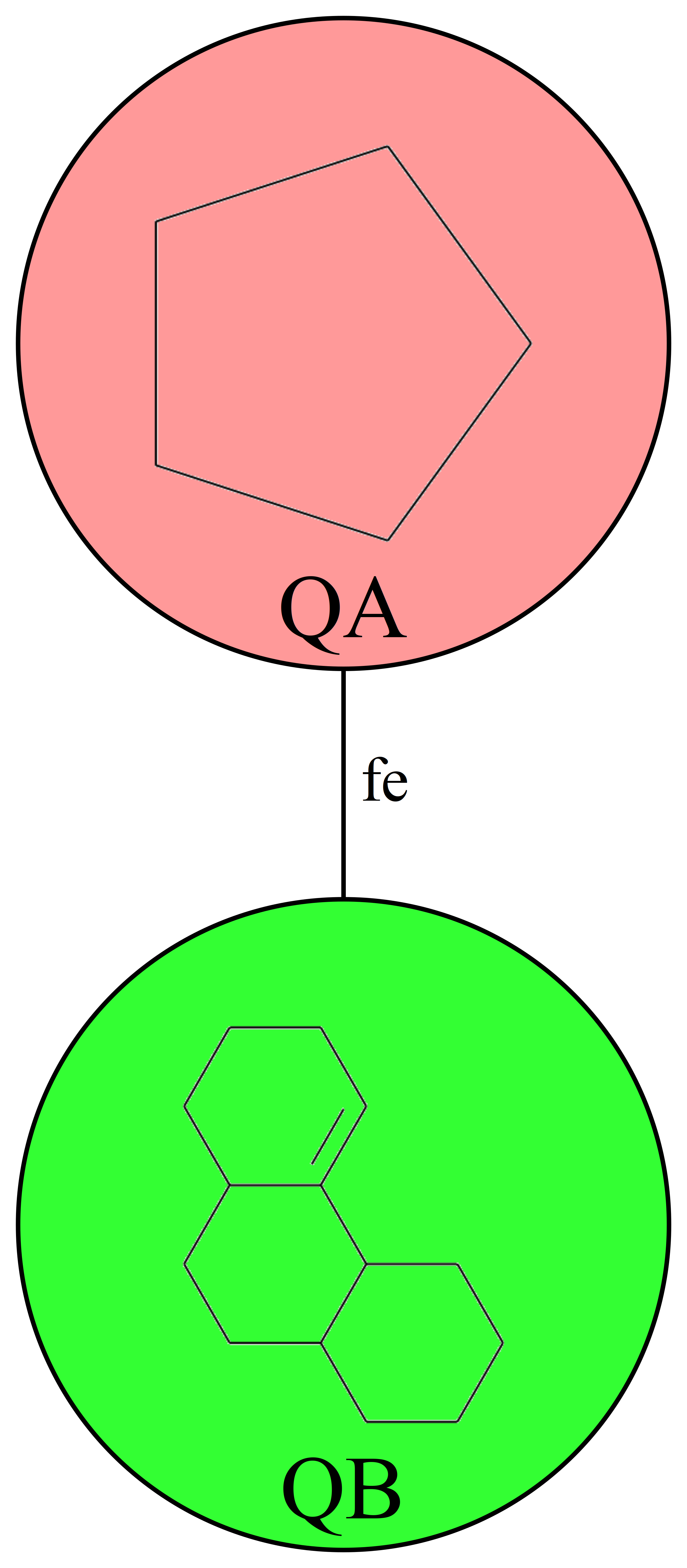
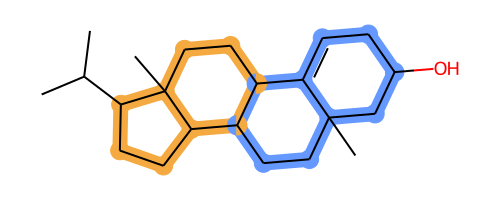
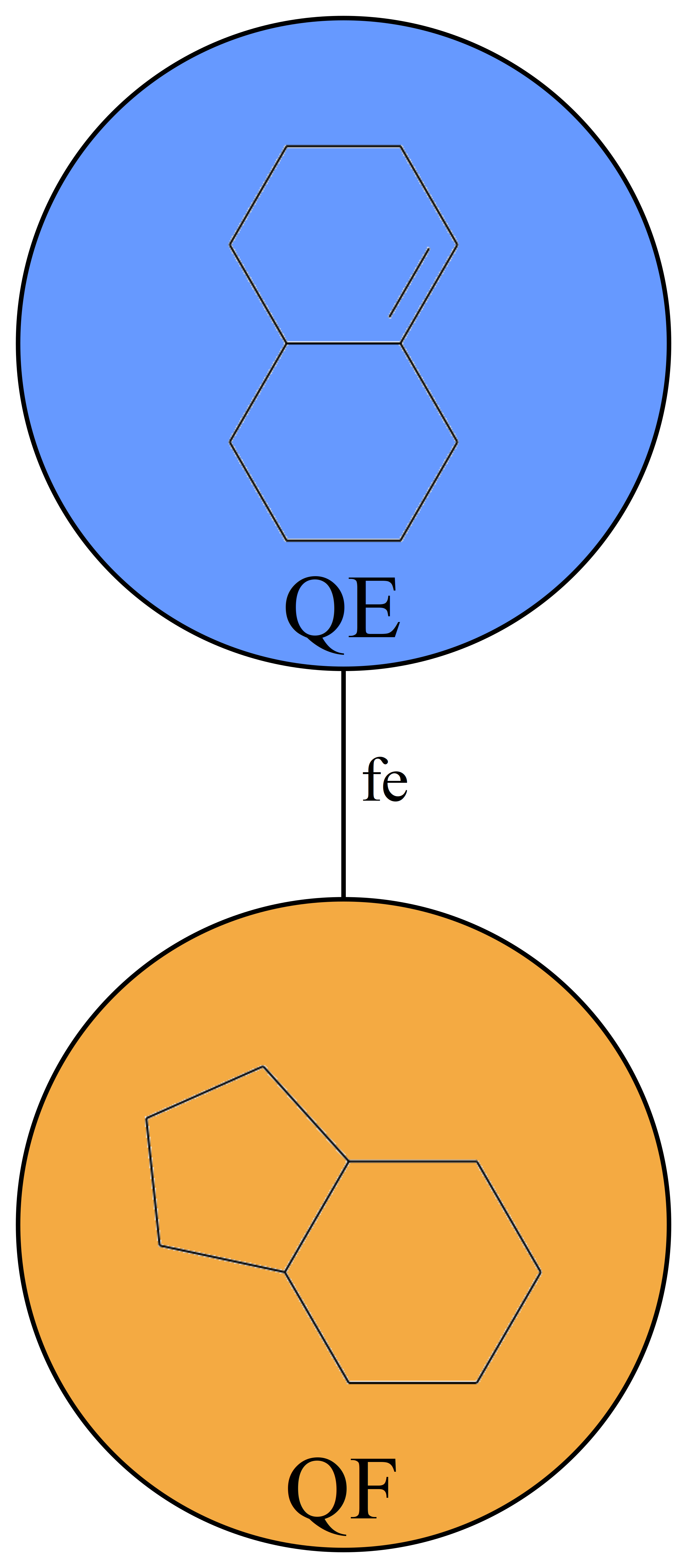
Larger fragments containing two or more rings can sometimes overlap, resulting in combinations of type fusion false positive overlap (ffo). Because these combinations are not the result of synthesis design, but rather an artifact from the method, they are considered false positives. To represent the resulting different, incompatible fragment connectivies, we decided to split fragment combinations graphs into separate alternative subgraphs.
An example of two alternative subgraphs is illustred below:
FCG A:
FCG B:
Usage
Fragment combinations graphs can be generated using the fragment_combination_graph module:
>>> from npfc import load
>>> from npfc import fragment_combination_graph
>>> df_fcc = load.file('fcc.csv.gz')  # dataframe with fragment combinations
>>> df_fcg = fragment_combination_graph.generate(df_fcc)