Fragment Combination Classification
Once fragments have been identified on a molecule, it is possible to systematically investigate how these are linked together. To achieve this, a deterministic algorithm is applied to each possible fragment pair to classify their combination. The resulting classfication is grouped into a category, type and optionally a subtype.
Fusions
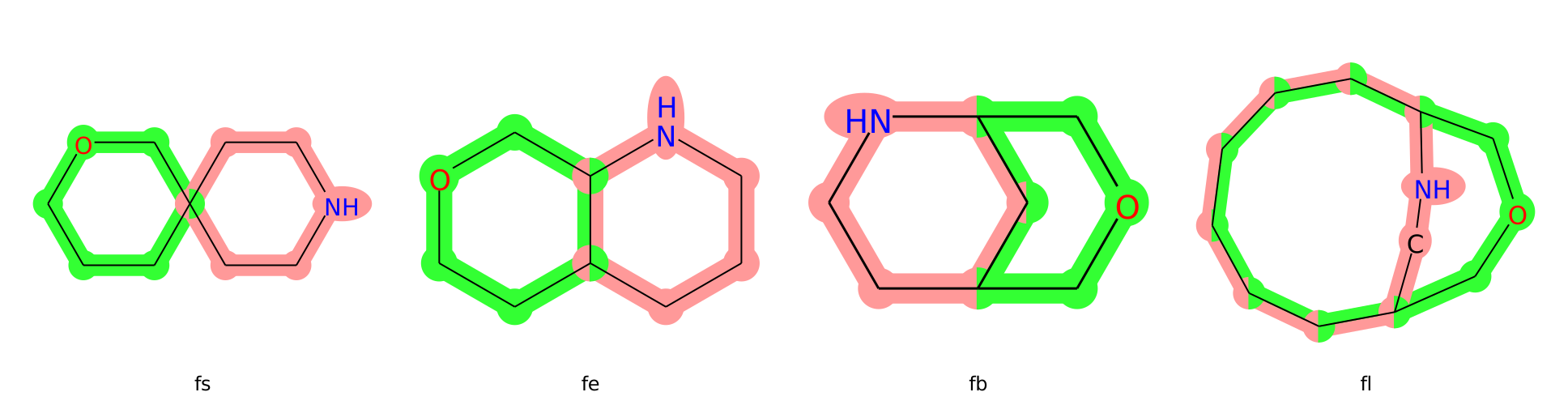
The fusion category describes the presence of fused atoms, i.e. common atoms shared by both fragments. The number of fused atoms determines the type of fusion:
1 fused atom in either fragments: fusion spiro (fs)
2 fused atoms in both fragments: fusion edge (fe)
3 ≤ fused atoms ≤ 5 in either fragments: fusion bridged (fb)
> 5 fused atoms in either fragments: fusion linker (fl)
Connections
When there is no fused atoms, the combination category is labeled as “connection”.
Fragments can be linked together by different paths, i.e. intermediary atoms between both fragments.
Monopodal Connections
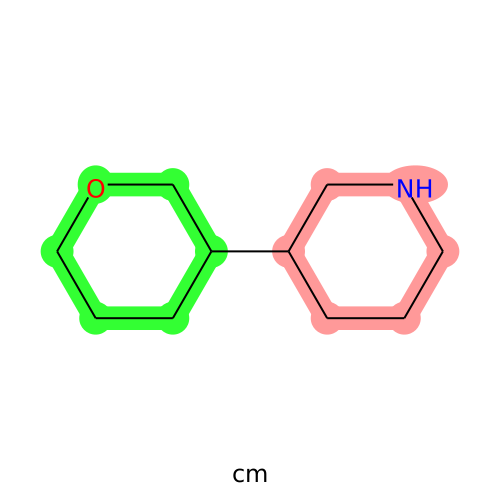
In case there is only one path, the combination is “connection monopodal” (cm).
Connections of Higher Degree
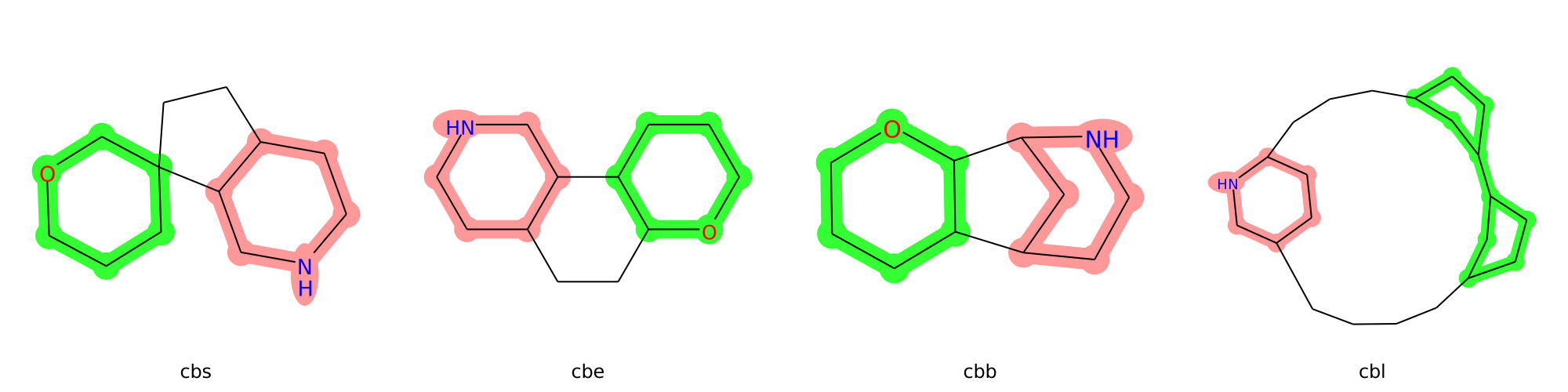
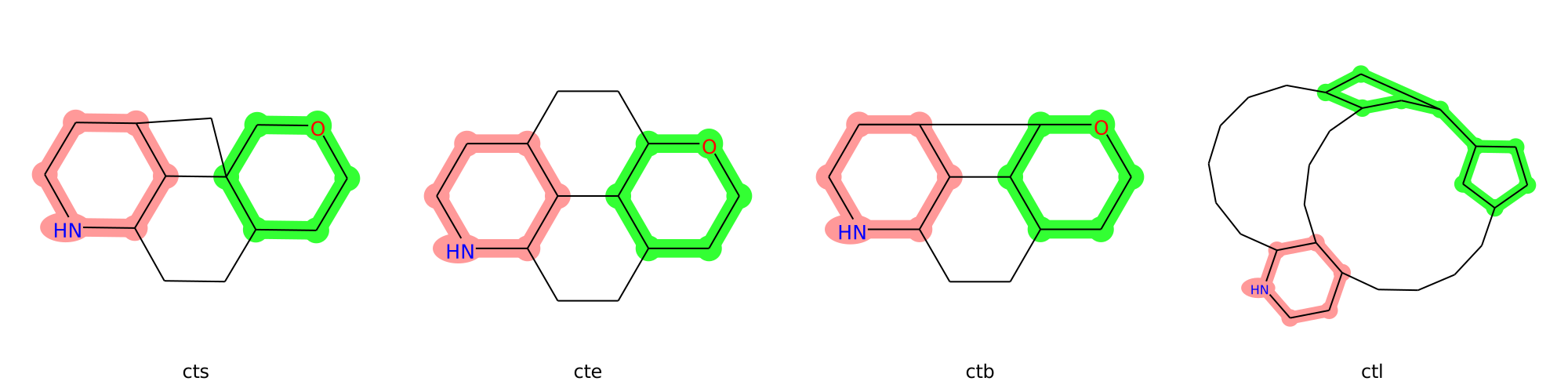
Likewise, a combination with 2 possible paths to link the fragments is labelled as “connection bipodal”, and so on for 3 possible paths (“connection tripodal”) and more than 3 (“connection other”). Another way to consider this is to count the number of intermediary rings directly located between both fragments:
monopodal: 0 intermediary ring
bipodal: 1 intermediary ring
tripodal: 2 intermediary rings
other: > 2 intermediary rings
Similar to the fusion types, a subtype is defined based on the number of fused atoms each fragment has with each intermediary ring:
spiro: either fragment has 1 fused atom with an intermediary ring
edge: both fragments have 2 fused atoms with each intermediary ring
bridged: either fragment has 3 ≤ fused atoms ≤ 5 with an intermediary ring
linker: either fragment has > 5 fused atoms with an intermediary ring
Rings that are between both fragments but have no fused atom with either of them are not considered to intermediary rings. A filtering is performed on intermediary rings to discard equivalent paths and thus not overestimate the connection degree.
To break possible ties, a priority had to given to certain substypes:
linker
spiro
bridged
edge
Connections bipodal
Connections tripodal
Connections other
Connections from the other type are not meant to represent thoughtful chemistry, but rather exist as a fail-safe for the algorithm, so that a combination label is always attributed to a pair a fragments.
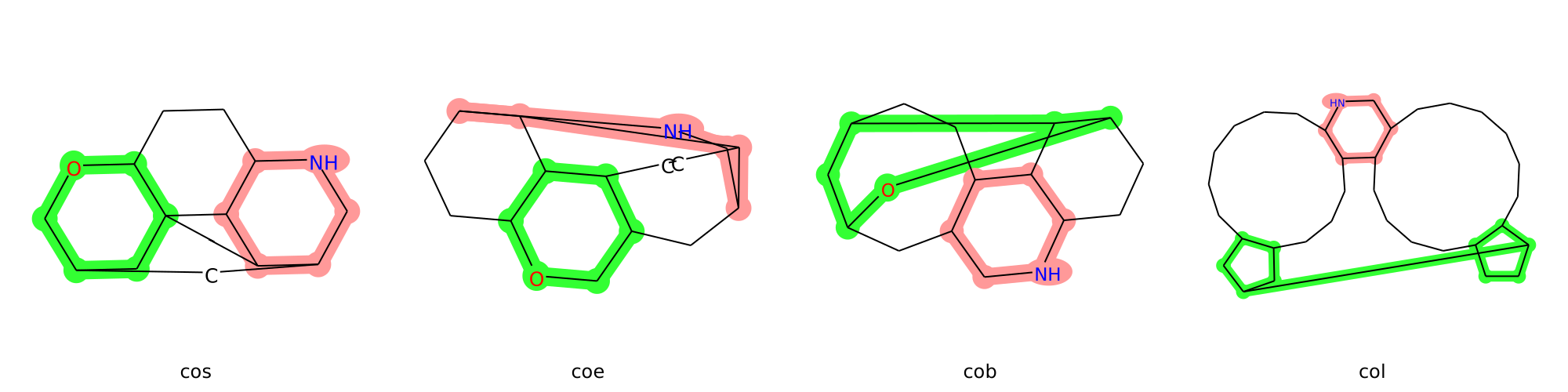
Annulated Connections
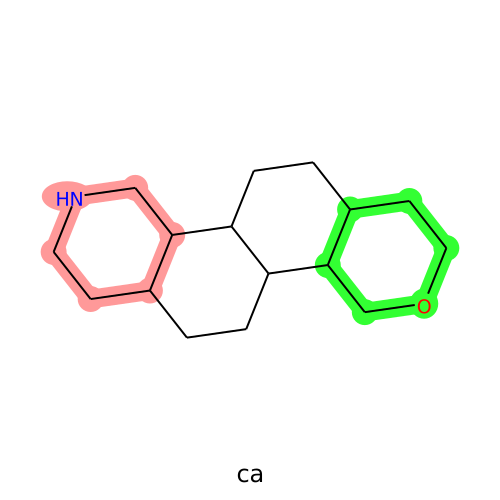
Given our modelisation using paths and intermediary rings between fragments, there is a special case of fragment combination that needs a special treatment. Indeed, the “connection annulated” (ca) is a type of combination where both fragments are linked by more than 1 path, but there is no intermediary rings either.
False Positives
Some fragment combinations are not the result of an synthetic design, but rather artefacts from this tool. These combinations are therefore labeled as false positives.
There are currently 3 types of false positives handled by the algorithm.
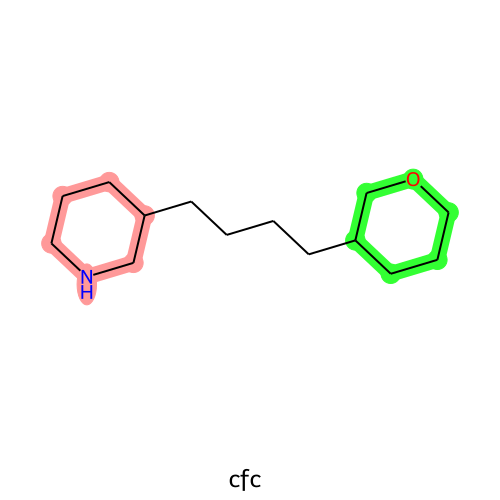
When fragment are too distant
For larger molecules, some pairs of fragments are very far away to each other and might therefore not be considered as true combinations. For consider this, a distance threshold of a maximum of 3 intermediary atoms between fragments was set. This category of false positive is labeled “connection false positive cutoff (cfc)”.
When one fragment is substructure of another
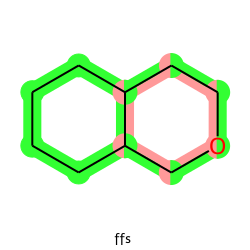
Depending on the fragments used for the study, some fragments might be substructures of others (i.e. a same ring with an extra methyl for one of the fragments or a simple ring found in a double ring).
In this case, all fragment hits of the smaller fragment will be redundant with those of the larger fragment and will not provide mucho more additional information. For this reason, such cases are classified as “fusion false positive substructure” (ffs).
When two fragments overlap
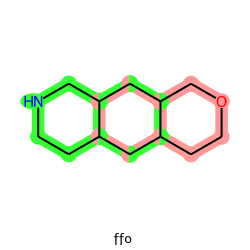
In some cases, fragments can have many fused atoms. However, this might not be the result of synthesis design, but rather an artifact of the Fragment Search. To identify such cases, an arbitrary rule was established as follows: if the fused atoms between both fragments constitute a full ring in the molecule, then it is not considered a proper fusion, but rather an overlap (fusion false positive overlap, ffo).
Usage
Fragment combinations can be classified using the fragment_combination module:
>>> from npfc import fragment_combination
>>>
>>> # manually
>>> mol = Chem.MolFromSmiles('C1COCC2(C1)CCNCC2')
>>> frag1 = Chem.MolFromSmiles('C1CCCNC1')
>>> frag2 = Chem.MolFromSmiles('C1CCOCC1')
>>> aidxf1 =  mol.GetSubstructMatch(frag1)
>>> aidxf2 = mol.GetSubstructMatch(frag2)
>>> fcc = fragment_combination.classify(mol, aidxf1, aidxf2)
The algorithm can be applied on a DataFrame containing the Fragment Hits as well:
>>> # on a DataFrame produced by fragment_search
>>> df_fhits = load.file('fhits.csv.gz')
>>> df_fcc = fragment_combination.classify_df(df_fhits)
The DataFrame generated this way contains all the information required for computing the fragment combination graphs (some column names are currently hard-coded).
Note
By default, exocyclic atoms in fragments are NOT considered during fragment combination annotation.